Google+ TecH2GEEks : NEWS
Showing posts with label NEWS. Show all posts

Thursday, 26 December 2013

5 top Linux and open source stories in 2013

Fantastic Tux Linux
Linux has long ruled some areas of computing such as supercomputing. But in 2013, Linux and the open source method of developing software started to quietly dominate all aspects of computing, from cars to the cloud, and end-user computing, thanks in part to Android and Chrome OS.
've been watching Linux since its first days over 20 years ago and even I've been impressed at its forward movement in 2013.
Here are the top five developments as I see them. I'll guarantee that some of them you've never heard of, but believe me when I say you will be influenced by them in the years to come. No matter what kind of computing you're involved in, you're going to be using Linux and open source software.

1. Open source software methodology goes everywhere

It's rare for developers these days not to use or create open source software. Even Microsoft is putting more energy into its open source efforts, such as Node.js, a tool/framework that uses JavaScript as its scripting engine. After all, Microsoft even helps build Linux these days.
But also what surprises me is how major companies of all sorts have united under the leadership of The Linux Foundation to create open source projects to unify their efforts
In 2013 alone, The Linux Foundation brought together the AllSeen Alliance for the Internet of things; OpenBEL for open source biological research; OpenDaylight, for almost all the Software-Defined Networking (SDN) companies; and Open Virtualization Alliance, and Xen Project for KVM and Xen virtualization.
And it's not just The Linux Foundation. Facebook's Open Compute Project has brought open source methodology to the data center. Juniper with Contrail has its own open source SDN take. And, Apache continues to make advantages projects such as Hadoop for Big Data and Lucene and Solr for search.
What all these projects have in common is that they're bringing together old enemies to work together. These companies are doing this not because there's anything magical or politically correct about open source. They're using open source because it enables them to create the best software at affordable rates. Pragmatically speaking, companies have decided it makes better business sense to share unified, open software than to create fragmented, proprietary programs.

2. The rise of the Chromebook

You can argue how popular Google's Linux-powered Chromebooks really are, but here are a few more facts showing that Chromebooks are quickly gaining users.
Dell, the last major OEM to not have a Chromebook, is releasing its first Chromebook in early 2014. Consumer electronics giant LG will also be releasing a new form factor for Chrome OS: theChromebase. This is an all-in-one (AIO) PC that combines Chrome with a 21.5-inch display with 1,920 x 1,080 full HD resolution.
It also appears that Android is making more of a move to the desktop. According to reports, "PC Plus" machines are on their way. These laptops will include both Windows 8.1 and Android. These first of these will be unveiled at the CES expo in Las Vegas in January.
With Windows 8.x's uphill struggle to gain market-share as quickly as previous versions, andMicrosoft with its Surface devices now competing directly with its PC partners, it's no surprise that Linux-based desktop competition beyond hard-core Linux users has finally started to emerge.

3. SteamOS: Mainstream Linux gaming arrives

Nothing underlines this shift in desktops more than Valve, a major PC gaming company, releasing SteamOS. This is a Debian-based Linux that's expressively designed for Linux PC gaming.
Like those other companies that have invested in Linux and open source software, Valve isn't doing this because they have warm, fuzzy feeling about Linux. No, Valve has released its own desktop Linux, and Steam Machines, dedicated Linux gaming consoles, because, "Windows 8 is a catastrophe for everyone in the PC space," according to Valve's billionaire chief executive Gabe Newell earlier this year.
As far as Valve is concerned, Linux is the future of computing.

4. Clouds: Linux everywhere

You can argue over the rise of Linux on the desktop, but no one can argue about how influential Linux is in clouds. With the exception of Microsoft's Azure, all major cloud software platforms — including Amazon's EC2 cloud, Google Compute Engine, and the various OpenStack implementations — are all based on Linux and open source software. For that matter, due to popular demand, you can also run Ubuntu, CentOS, SUSE Linux Enterprise Server (SLES), and openSUSE on Azure.
If you're going to be using the cloud for IT soon — and chances are you will be — you're going to be using Linux. It's just that simple.

5. Android rules mobile

Away from the desktop, Linux, in the form of Android, already rules end-user computing. Android has a comfortable lead on smartphones over Apple iOS. And by the middle of this year, share in Android tablets blew past Apple's iPad line. The number one mobile operating system is now Android. The only real question is who will be in third place behind Android and iOS.
Indeed, with the continued decline of PCs, it seems possible that Android may yet become the single most popular end-user operating system on all platforms.
So, there you have it. In a year where there were no "big" Linux stories, Linux and open source continued to grow in every aspect of computing. The coming year will only see more of the same. The Linux Foundation's executive director Jim Zemlin recently declared that 2013 was the year of "Linux on Everything." 

Friday, 15 November 2013

Samsung silently launches the Galaxy Core Plus

Back in May of this year, Samsung launched a phone in several Asian and European markets called the Galaxy Core. It had a 4.3 inch screen that pushed 800 x 480 pixels, it had a 5 megapixel camera, and under the hood there was a 1.2 GHz dual core processor and 1 GB of RAM. Today, on Samsung’s Taiwan website, a new device has appeared called the Galaxy Core Plus. So what’s been upgraded? Surprisingly … nothing. In fact, there’s only 768 MB of RAM in the Core Plus compared to 1 GB in the regular Core. About the only thing that’s “good” about the Core Plus is that it ships with Android 4.2 whereas the Core ships with Android 4.1.
Why is Samsung pulling this kind of bullshit with consumers?
We’ll never really know because we don’t have regular meetings with their product managers, but I have a feeling this device was created for logistical reasons. Right now, Samsung sells two devices with 3 GB of RAM, the Note 3 and the Galaxy Note 10.1 2014 Edition. That’s enabled thanks to the use of six 768 MB chips. Samsung would rather maximize their output of 768 MB chips than make both 768 MB chips and 512 MB chips, thus explaining (in my mind at least) why the Core Plus exists.
Should you buy the Core Plus? At 7,990 TWD ($270) you’re better off trying to find a used Galaxy S III and then slap a new battery in there. Shouldn’t be too hard in Taiwan given the number of places that sell second hand hardware. I know because I saw those places with my very own eyes earlier this year.

Samsung launches Galaxy Core Plus with curious step backwards in specs

Samsung unveils Galaxy Core Plus with a curious step backwards in specs
When is a smartphone upgrade not an upgrade? When it's the Samsung Galaxy Core Plus, which has quietly launched in Taiwan. Although it does use Android 4.2 where the original Galaxy Core ran 4.1, it's carrying just 768MB of RAM and 4GB of expandable storage -- both steps down from the 1GB of RAM and 8GB of space inside its months-old predecessor. Android Beat speculates that Samsung is maximizing its production efficiency with the downgrade; it may be using the same 768MB RAM chips that it also makes for high-end devices like the Galaxy Note 3. Whether or not that's true, it's clear that not much else has changed. The Plus still includes a 1.2GHz dual-core processor, a 4.3-inch 800 x 480 screen, a 5-megapixel rear camera and a front VGA shooter. While the new handset is relatively cheap at NT$ 7,990 ($270 US) off-contract, we'd rather hunt around for a used example of its older, more advanced sibling.

Curved screens not weird enough for you? Samsung plans a three-sided phone display

Curved screens not weird enough for you? Samsung plans a three-sided phone display

Leave it to Samsung to once again make us say “huh?” when it comes to new smartphone screen technology.
The Korean electronics giant is reportedly developing a three-sided smartphone screen — so it will cover the front and two sides of a phone — according to a Bloomberg report.
A source tells the news agency that Samsung is working on adapting its “Youm” technology, which is used in its curved Galaxy Round phone, to display messages on the side displays. So, for example, the phone could display incoming notifications on the sides, or the title of the song it’s playing, without needed to wake up the display.
The three-sided display tech could appear in one of Samsung’s Galaxy S or Galaxy Note phones by late next year. Samsung also plans to have each side of the display operate independently.
Perhaps more than any smartphone maker, Samsung hasn’t been afraid of trying crazy new ideas with its phone screens. Sometimes that pays off, like its foray into huge screens with the Galaxy Note, which basically ushered in the “phablet” smartphone phenomenon. But most of the time, like its attempt to revive the flip phone with the Galaxy Folder, Samsung’s crazy display experiments are quickly forgotten.
But now, with other smartphone makers like LG inexplicably moving towards curved displays, Samsung needs another crazy idea to call its own.
There are certainly issues with the three-sided display approach: Since our phones are getting progressively thinner, there’s not much room for useful information on side displays without purposefully making a thicker device. I also wish more companies would mimic what Motorola is doing with its Moto X display, which can show sporadic notifications  on the front of its screen without huge battery costs.
Earlier this month, Samsung laid out its future innovation plans during an analyst meeting, where it revealed that it hopes to have truly foldable phone screens by 2015. Ultimately, that seems to be where the entire industry is headed. But until we get there, we’re going to see plenty of attempts by smartphone makers to stand out.

Samsung Galaxy S5 Rumors: Company Reportedly Working On New Device With Wrap-Around Display

Samsung Galaxy Round
Samsung Galaxy Round may be joined by another device in the Galaxy family that will utilize the same flexible display technology. (Photo : Samsung Tomorrow Official Global Blog)
Samsung Electronics Co. is working on plans to release a new installment in the Galaxy lineup of smartphones sometime next year with a display that wraps around on its edges so that users can read messages or monitor the stock market while looking from an angle.
According to two sources from Bloomberg who are familiar with the plans, the phone will use an upgraded version of the Samsung technology called "Youm," which currently is featured on the curved-display Galaxy Round handset. The two sources requested to remain anonymous since the plans haven't been released by the South Korean giant to the public just yet. The three-sided display would be used in the S or the Note series of flagship smartphones from the company. According to the current plans reportedly in development, each side of the three-sided display will operate independently.
Currently, Samsung is locked in a smartphone rivalary with Apple Inc. to see who can introduce more innovative devices as they brace for a slowdown in the high-end smartphone market. Currently Samsung sells about one of every three devices. Apple is developing new iPhone designs inculuding bigger screens with curved glass and enhanced sensors that can detect different levels of pressure, according ot a person familiar with the matter said about plans from as late as November 10.
"Samsung is the dominant player," Lee Do Hoon, an analyst at CIMB Group Holdings Bhd in Seoul, said by phone Thursday to Bloomberg News. "That gives it a competitive advantage over Apple in the race to make phones with bendable displays."
Currently the device is simply the subject of rumor as the company hasn't yet announced anything official. As a result there isn't yet a set timeline for the release of such a device.
Are you interested in this new smartphone design from Samsung? Comment and share your thoughts with us below.

What’s the real story behind Samsung and Tizen?

Even as Android celebrated its numero uno position in the mobile and tablet OS stakes with current global market share of 81 percent,according to IDC, came the news of Samsung starting to put its muscle behind Tizen, a new OS.
While there are many new mobile OSes in the works and some are already appearing on smartphones — Firefox and Sailfish — for instance, what’s significant is that Samsung, which accounts for a mammoth 63 percent of all Android shipments—smartphones and tablets–is pushing Tizen.
Screengrab from Tizen
What gives? Is Samsung risking the position it has gained thanks to Android software in a bid to control the whole mobile ecosystem (both hardware and software), or is it a far bigger prize that Samsung is after? In this two part series, we take an in-depth look at Tizen, where Samsung fits in, how it may impact Android and whether Samsung is looking at a future that goes far beyond smartphones.
What is Tizen?
The Linux community conceptualized Tizen in 2012 as an ongoing project within the Linux Foundation, under the Tizen Association. Tizen is an open source, standards based software platform aimed towards various mobile operators and technology manufacturers. Tizen differentiates itself from other mobile operating system through its immense scalability and developer friendly features. And to give you a clue about Tizen’s real purpose, the utility of the software extends far beyond mobile devices, developed for tablets, netbooks, automobile systems and televisions as well.
The operating system is an effective merger between two Linux based platforms – LiMO (Samsung and Vodafone) and MeeGo (a mix of Nokia’s Maemo and Intel’s Moblin), with parts of Samsung’s defunct Bada OS as well.
Considered an extremely flexible environment for application development in HTML5, Tizen’s touted to provide apps cross-platform accessibility. In plain English, that means the Tizen development framework allows developers to write once and use anywhere (with minimal extra effort), great for a scenario where though Android and iOS are the biggies in the mobile OS space, there’s BlackBerry 10, Windows Phone and now many others like Firefox and Sailfish too.
The latest Tizen 3.0 release boasts of Linux-HTML5-based programming that claims the ability to sustain a 3D user interface and an extremely scalable performance threshold, capable of working with just 256kb of RAM. It is also designed to be compatible with Android and iOS.
Who runs Tizen?
The Technical Steering Committee managing the Tizen Association includes a collection of 10 industry partners as its board members, many of them industry heavyweights: Fujitsu, Huawei, Intel, KT Corp, LG, NTT Docomo, Orange, Samsung, SK Telecom and Vodafone.
The interest in the OS recently surged as the first Asian developer’s conference  took place in Seoul and Samsung made new announcements regarding its investments in Tizen.
Samsung and Tizen
Samsung as a leader of the Steering Committee has made significant investments in the Tizen development process. At the Asian developers meet Samsung announced its partnership with Intel, Fujitsu, Huawei, Here (Nokia mapping service), Konami, McAfee, Panasonic, Sharp, The Weather Channel, smaller start-ups such as Appbackr and 26 other companies to standardize the future hardware platform across numerous device categories while it finds innovative apps for Tizen.
In order to accelerate the app development goal Samsung also set a late 2014 deadline for a product launch and eagerly announced funding for developers to populate an as-of-yet barren applications market place.
This move by Samsung isn’t surprising when you consider that it is the only large mobile device manufacturer that doesn’t have autonomy over its own software.
The mobile operating systems’ market is shared between the four companies–Apple with iOS, Google with Android, Microsoft with Windows phone and BlackBerry, with Google and taking lion’s share and iOS second. Microsoft and BlackBerry are small players. And 63 percent of all Android mobile devices in the market are manufactured by Samsung according to Localytics.
Companies like Apple and Microsoft are also experienced players in the hardware-software convergence, with Apple’s hardware accompanied by iOS 7 is making waves in the market while Microsoft’s acquisition in Nokia has shown a 156 percent growthin consumer adoption since third quarter of 2012.
Google with its acquisition of Motorola has also started making a move towards an independent stake in the handset market with its Moto X and Moto G series of phones. Samsung remains the only hardware giant without its own software and is woefully dependent on Google’s Android OS.
Is Samsung Trying To Dump Google?
If Samsung is to control its destiny, especially now that Google’s Motorola acquisition is spewing new smartphones, it needs to build a complete ecosystem. That’s the only way Samsung can venture beyond its current role as a hardware player and compete with Apple and Microsoft with a unified device solution. This is critically important in business use, because CIOs prefer unified solutions that are tightly integrated and far more secure.
Today, Samsung plays host to Google’s Play store on its devices and loses influence over the intrinsic lifestyle of its users. If Samsung gets Tizen right, it will directly be able to tap in to new revenue streams through the sales and delivery of applications, media, messaging and other products similar to Google’s Play store without having to miss out on profits as it currently does.
It remains to be seen if Tizen’s supposed low cost and high benchmark quality has what it takes to persuade consumers to shift away from Google. And even as Samsung attempts to fill the Tizen landscape with new and innovative apps it is very likely that the mobile device space is just one of the many new device verticals that is about to become the battleground for the next all-out tech war between giants.
Watch out for Part 2, where we look at the larger Tizen game and how it fits into the Internet of Things revolution, possibly the most important technology trend in coming years

Thursday, 14 November 2013

Official iOS 7.0.3 Jailbreak Software for iPhone 5S 4S Info

Official iOS 7.0.3 Jailbreak Software for iPhone 5S 4S Info Here

Within just a FEW MINUTES of using the Unlock-Jailbreak Official jailbreak software solution, you will have an Unlocked & Jailbroken iPhone 5S,5C,5,4S. Whether your iPhone is a 2G, 3G, 3GS, 4,4S or 5,5S,5C or iPad. The #1 Unlock/Jailbreak iPhone Software just released works on iOS 7 to iOS 7.0.3 and it is Used by the Apple Employees! Within just a FEW MINUTES of using the iOS 7.0.3 jailbreak software solution, you will have an Unlocked & Jailbroken iPhone. Jailbreak iPhone Whether you have the iPhone 5, 4S, 4, 3GS, 3G, 2G – you can Unlock and Jailbreak it untethered!
For more information visit the official blog at: http://newios7jailbreak.com
iPhone 5,5S,4 or 4S users that have installed iOS 7, 7.0.3 can now break free from the constraints of Apple exclusivity using the new jailbreak tool. Thanks to UJB Team, iPhone users are able to enjoy freely their iPhone 5, 4s, 4, 5s and 5C through user-friendly untethered jailbreak.
UJB is the first to offer untethered jailbreak in the industry. Unlike the tethered method, untethered jailbreak does not need a computer, and rebooting away from one essentially does not affect the process and it will get Cydia installed on your iPhone in Minutes.
Gold Apple iPhone 5s Smartphone
Unlock-Jailbreak Team is a highly capable team of technical experts that are able to jailbreak iPhones on iOS 7,7.0.2 7.0.3. It seems almost everyone wants to jailbreak the latest iOS 7 and iOS 7.0.3 in the market, including two-thirds of Apple users who have upgraded to the system and iOS 7.0.2.
While the recent iPhone 5S and 5C release had kept Apple fans on their toes, it also left users wondering if and when they can make the most out of their iPhones, as most jailbreak programs apply to older iDevice Operating Systems. The iJailbreak Pro team has put an end to the guessing game with the latest jailbreak iPhone iOS 7 and iOS 7.0.3 software.
“We’re here to help you Jailbreak and Unlock your iPhone and make the entire process easy and painless for you. We can jailbreak all iPhone models and unlock all firmwares, even the first two generations of Apple TV,” the iJailbreak Pro team says.
The easy and safe jailbreak method is made possible by Unlock-Jailbreak’s simple software for even the least techie iPhone owner. iJailbreakPro.comdetails the jailbreak process that lets users supercharge and customize their iPhone in less than 5 minutes. The website fully illustrates the step-by-step procedures of purchasing, downloading and installing the software.
With the iPhone iOS 7 and iOS 7.0.3 jailbreak now presented on the official blog www.newios7jailbreak.com, iPhone users can now access all features, downloads and free software and enjoy their mobile phone with a variety of apps, themes, music, games and much more.
WARNING: This product WILL NOT jailbreak Apple iPhone 5/4-series phones with Apple iOS 6.1.3-7.0 or later. The product mentioned in this post is not endorsed or recommended by our website. This article is published for information purposes only.

Jolla smartphones to ship with Yandex app store for Android apps, HERE mapping onboard


jolla-other-half-first-phone
Helsinki based smartphone startup, Jolla, has announced that it will be integrating a mapping solution powered by Nokia’s HERE Maps division in its upcoming operating system dubbed as Sailfish OS. The partnership will involve licensing up to date map data and location information such as restaurants for over 190 countries. 
“We are excited that HERE is providing its leading positioning services for Sailfish OS and that our maps
application will be powered by HERE cloud services. This will help us deliver the optimal mobile maps experience to our customers,” says Jolla CEO, Tomi Pienimäki.
An equally interesting announcement is the plan to integrate an Android app store on the phone. Powered by Yandex, the app store will provide top Android applications that are fully compatible with Android run time provided by Myriad AG.
The store currently features 85,000 apps across 17 categories and most of the well known Android applications are available here too. This store will augment the native app store that will also exist on the phone. Called the Jolla Harbour, it is a free to charge app publishing portal and developers can download the Sailfish SDK now. Jolla Harbour can serve both native Sailfish and ported Android apps. The first Jolla device will be available later this year and we’re quite excited to see if it can make a splash in the highly crowded and competitive smartphone world.

Oppo N1 Benchmarks

Oppo N1 Benchmarks
Oppo unveiled the N1, the company’s latest flagship smartphone back in September. We brought you the unboxing of the device earlier this week, here we have the benchmarks of the smartphone. The phone is powered by a powered by a quad-core Qualcomm Snapdragon 600 (APQ8064) processor clocked at 1.7 GHz with Adreno 320 GPU and pack 2GB of RAM. It has a 5.9 inch full HD 1920×1080 IPS LCD display and runs on Android 4.2 (Jelly Bean) with Color ROM pre-installed. Let’s find out how it performs in various synthetic benchmark tests.
Quadrant Benchmark
Oppo N1 Quadrant
It manages to score 10185 points in the Quadrant benchmark.
AnTuTu Benchmark 3.3
Oppo N1 AnTuTu Benchmark 3.3
It scored 24405 points in the AnTuTu Benchmark 3.3, better than the HTC One. We also ran the AnTuTu 4 benchmark, and it scored 26710 points.
Vellamo 2.0 HTML5
Oppo N1 Vellamo 2 HTML5
The N1 scored 2040 points in the Vellamo 2 HTML5 browser benchmark.
Vellamo 2.0 Metal
Oppo N1 Vellamo 2 Metal
It manages to score 769 points in the Vellamo 2 Metal, CPU subsystem performance test.
Linpack Single Thread
Oppo N1 Linpack Single Thread
It managed to clock around 283 MFLOPS in the Linpack single thread benchmark.
Linpack Multi-Thread
Oppo N1 Linpack Multi-Thread
It manged to clock 598 MFLOPS in the Linpack Multi-Thread benchmark.
NenaMark 2
Oppo N1 Nenamark 2
The N1 tops the Nenamark 2 GPU benchmark by clocking 60.9 FPS.
GFXBench 2.7 T-Rex (On screen)
Oppo N1 GFXBench 2.7 T-Rex OnScreen
It clocked 14 FPS in the GFXBench 2.7 T-Rex OnScreen benchmark.
GFXBench 2.5 Egypt HD (On screen)
Oppo N1 GFXBench 2.5 Egypt OnScreen
It clocked 36 FPS in the GFXBench 2.5 Egypt OnScreen benchmark.
Basemark X HD (Onscreen)
Oppo N1 Basrmark X OnScreen
It manged to clock around 7.7 FPS in the Basemark X OnScreen, better than the Oppo Find 5.
Basemark X HD (Offscreen)
Oppo N1 Basemark X OffScreen
It managed to clock around 6.96 FPS in the Basemark X OffScreen benchmark.
We will bring you the camera review, gaming performance videos and the complete review of the phone soon, in the mean time check out the Oppo N1 Gallery

Asphalt 8: Airborne for Windows 8, Windows Phone 8 now available

asphalt-8
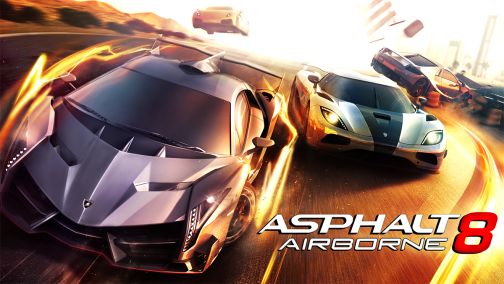
Earlier this year, it was announced that the very popular game, Asphalt 8, would be making its way over to the Windows Phone 8 platform soon. The arcade racing game is now available on both the Windows Phone 8 and Windows 8 platforms. The USP of the driving game is the ability to perform dynamic, high speed aerial stunts in an intense driving experience. 
Feature of Asphalt 8: Airborne
  • Drive 47 high-performance cars (80% New!) from Lamborghini Veneno, Bugatti Veyron, Ferrari FXX and Pagani Zonda R
  • Newly recorded high-fidelity motor sounds for realistic audio immersion.
  • Hit the ramps and take the race upward, Perform barrel rolls and wild 360 degree jumps and Maneuver through the air while pulling off stunts
  • 9 different settings like Venice, French Guiana, Iceland, the Nevada Desert & other exciting locations!
  • 8 seasons & 180 events in the Career mode
  • Stunning visuals with next-gen shaders, real-time geometry reflection & other amazing effects
  • Simultaneous multiplayer action for up to 8 opponents!
  • Tracks from Bloc Party, Mutemath & The Crystal Method!
The game has been priced at Rs. 55 for Windows Phone 8 while the Windows 8 version is available for Rs. 100. You can get the Windows Phone 8 and Windows 8 versions of Asphalt 8: Airborne by clicking through

Motorola Moto G with 4.5-inch HD display, quad-core Snapdragon 400 processor announced, starts at $179

Motorola Moto G
Motorola has finally announced the Moto G, the company’s latest budget smartphone as they promised. It has a 4.5-inch (1280 x 720 pixels) edge-to-edge display at 329 ppi with Corning Gorilla Glass protection, powered by a 1.2 GHz quad-core Snapdragon processor and run on Android 4.3 (Jelly Bean) with upgrade to Android 4.4 (KitKat) soon. It has a 5-megapixel rear camera with 720p HD video recording and a 1.3-megapixel front-facing camera. It has a water resistant coating both on outside and inside for complete protection.
It also comes with removable back covers in and Flip covers in seven colors as well as Grip Shells in five colors. It also comes with FM Radio and Dual SIM support in select markets.
Motorola Moto G specifications
  • 4.5-inch (1280 x 720 pixels) edge-to-edge display at 329 ppi with Corning Gorilla Glass protection
  • 1.2 GHz quad-core Qualcomm Snapdragon 400 processor with Adreno 305 GPU
  • Dual SIM (Optional)
  • Android 4.3 (Jelly Bean) with option to upgrade to Android 4.4 (KitKat)
  • 5MP rear camera with LED flash, 720p HD video recording at 30fps
  • 1.3MP front-facing camera
  • 6.0-11.6 mm thick (curve) and weighs 143 grams
  • 3.5mm audio jack, FM Radio
  • 720p HD video playback
  • 1GB RAM, 8GB/16GB internal memory
  • 3G, WiFi 802.11 b/g/n, Bluetooth 4.0, GPS, GLONASS
  • 2070 mAh battery
The Motorola Moto G is priced at $179 for the 8GB version and the 16GB version costs $199. It will be sold without contract and an unlockable bootloader first in Brazil this week and parts of Europe,  Latin America, Europe, Canada and parts of Asia within the next few weeks. It will be available in the US, India, the Middle East and more of Asia in early January 2014. Motorola has announced that the Moto G will be available in more than 30 countries with 60 partners by 2014

Wednesday, 13 November 2013

Samsung Galaxy S3 Android 4.3 Update Problems Emerge

Earlier this month, the highly anticipatedSamsung Galaxy S3 Android 4.3 Jelly Bean update started rolling out, bringing Galaxy Gear support and other features to users of the aging smartphone. However, as the Galaxy S3 roll out continues, we are starting to get a glimpse at the other side of the update as Galaxy S3 users are reporting several Android 4.3 update problems including battery life drain.
Last month, Samsung finally confirmed the expected, announcing a Galaxy S3 Android 4.3 Jelly Bean update roll out. The update, which had been expected for quite some time, started rolling out several days ago, bringing a number of enhancements to Galaxy S3 Android 4.3 update users including support for the Galaxy Gear smartwatch, Samsung KNOX for added security, some of the software features from the Galaxy S4, and of course, features from Android 4.3 Jelly Bean itself.
Samsung-Galaxy-S3-Android-4.3-Update
The Galaxy S3 Android 4.3 update continues to roll out though it still hasn’t hit the United States. The Sprint Galaxy S3 Android 4.3 update was slated for November 6th, only to miss that date for unexplained reasons. The software emerged on Sprint’s website yesterday with a new build, a sign that Sprint isn’t quite done with the testing process. And while anticipation is high, Sprint Galaxy S3 owners might want to consider themselves lucky at this point.
For several days now, we’ve been monitoring the Galaxy S3 Android 4.3 Jelly Bean roll out. And while there are certainly some users who are enjoying the new features, there are plenty of others that are complaining about a multitude of issues that have emerged with the new software.
Forums are rife with complaints from Galaxy S3 users on Android 4.3, many of them on Vodafone Ireland, the first carrier to release the Galaxy S3 Android 4.3 Jelly Bean software. Users who have installed the software are, unsurprisingly, dealing with some perceived issues including battery drain, a sluggish user interface including taps on the home button and opening apps, and more.
The most prevalent issue that Galaxy S3 users have with the update is the perceived impact that it has on the device’s battery life. There are users complaining about massive battery drain issues, issues that have caused many to lash out. Battery life issues are common after major updates so to see complaints isn’t surprising.
Samsung-Galaxy-S3-wireless-charger-Review-006-575x380
Often, software updates will stabilize over time so it’s possible that the battery life problems and sluggish UI issues that are dominating these forums will dissipate in the near future.
Issues or not, the Galaxy S3 Android 4.3 roll out continues and it is expected to hit the United States in the near future. Rumors suggest that the software will touch down for major carriers this month and the nation’s fifth, U.S. Cellular, says that it will be rolling it out in the coming weeks. Users in the United States should remain hopeful that extensive testing will mitigate these issues but simply put, software updates are never one hundred percent perfect and it looks like the Galaxy S3 Android 4.3 update might be far from it at this point.

Popular Posts


© 2013 TecH2GEEks . All rights resevered. Designed by TecH GEEks

Back To Top